The Regulatory and Certification Landscape
Any orbital launch attempt, especially by a vehicle that has experienced an anomaly, operates under intense regulatory oversight. The framework governing these operations dictates the pace and conditions under which the launch team can proceed from final checks to ignition commands. The pressure to perform is amplified by the sheer number of stakeholders watching, from government agencies to commercial partners.
FAA Licensing Framework and Compliance Verification
A significant factor underpinning the current operations is the existing regulatory permission granted by the relevant authorities. The operator possesses an active commercial space launch license, authorized under Part Four-Fifty of the regulations, which was issued late in the prior year (2024) and remains valid for several years forward. This umbrella license is structured to permit multiple orbital missions from the designated launch site, contingent upon the successful closure of any prior flight mishap investigation. However, the narrative has gained a late-stage complication. Due to the scrubbed November 9th and 10th attempts, the launch now bumps up against new commercial airspace restrictions that took effect on November 10th, stemming from the ongoing government shutdown fallout. This is where the partnership shines: the launch team’s ability to move forward with propellant loading is a direct indication that they have worked with the Federal Aviation Administration (FAA) to secure a waiver or exception, formally clearing the vehicle for flight under revised operational parameters for a November 12th attempt.
Integrating Lessons from the January Orbital Insertion. Find out more about BE-4 engine methane fueled rocketry advantages.
The official conclusion of the investigation into the January incident served as a gate check for the NG-2 launch campaign. The release of the FAA’s findings in the spring codified the necessary technical changes. The ability to proceed with propellant loading and the impending launch is a direct indication that the authorities have reviewed the evidence and formally accepted the implemented solutions—especially those relating to propellant handling and descent controls—under the revised framework. The success of the *NG-2 mission*, carrying the ESCAPADE payload, is essential as it serves as the next data point for full National Security Space Launch certification.
The Broader Sector Context: A Trending Digital Narrative
The specific activity surrounding New Glenn, while technically focused, is part of a much larger, more dynamic narrative that has become a dominant, or “trending,” topic across the digital ecosystem, often referred to by its current nomenclature, *x.com*. This intense interest reflects a wider sector-wide maturation and geopolitical sensitivity surrounding space access. It’s a full-contact sport now, and every milestone is scrutinized.
The Ecosystem of Orbital Access in Twenty-Five. Find out more about BE-4 engine methane fueled rocketry advantages guide.
The current year is marked by an undeniable surge in the pace of global space operations, moving far beyond the traditional government monopoly. The sector is experiencing unprecedented growth, with valuations soaring and strategic importance recognized globally. This environment features multiple heavy-lift providers ramping up operations, creating a rich landscape for both customers and observers. The industry is shifting toward an “intelligent space infrastructure model,” blending rocketry with artificial intelligence, autonomous operations, and innovative financing, which naturally draws broad media attention. To keep up with this pace, understanding the basic mechanics of cryogenic propulsion is no longer optional for serious observers.
Competing Architectures and Market Positioning
The New Glenn vehicle operates within a fiercely competitive arena, especially against other large-capacity launchers. This competition drives innovation but also intensifies public interest in every milestone achieved or missed. The vehicle is explicitly positioned as a response to established heavy-lift providers, aiming to secure a significant share of both commercial satellite deployment and critical governmental contracts. Think about it: New Glenn’s seven-meter fairing offers twice the payload volume of most commercial launch systems, making it an extremely attractive platform for larger or more complex military and intelligence satellites. The success or failure of any major operational event, such as this launch preparation, is immediately contextualized against the achievements and challenges of its direct counterparts, fueling extensive online analysis on platforms like *x.com*.
Implications for Future National Security and Commercial Manifests. Find out more about BE-4 engine methane fueled rocketry advantages tips.
The developments surrounding this launch carry tangible future consequences, affecting both the defense posture of allied nations and the fulfillment of contractual obligations to a growing list of commercial entities. This duality ensures the story remains relevant and worth following due to its “broader implications.”
Certifying for National Security Space Launch Requirements
One of the stated objectives for the inaugural missions is the crucial process of certifying New Glenn for the National Security Space Launch (NSSL) program. This certification involves rigorous vetting by the U.S. Space Force to ensure the rocket meets stringent reliability and security standards necessary for deploying high-value national assets. New Glenn has already been added as a provider for NSSL Phase 3 Lane 1 missions, which cover launches to easier orbits with less mass, requiring only one successful launch for qualification. However, the contract awards announced in April 2025 also indicate Blue Origin is poised to become a Lane 2 provider for more stressing orbits, a status that requires full mission assurance and the successful completion of this second flight. The successful completion of the NG-2 mission, particularly with its complex in-space maneuvers and the planned booster recovery attempt, will be a major data point in this ongoing certification timeline, directly influencing future defense contracting decisions.
The Horizon of Customer Commitments and Manifest Depth. Find out more about New Glenn seven engine static fire validation data strategies.
Beyond governmental contracts, a substantial backlog of commercial customers awaits the vehicle’s operational maturity. This manifest includes major constellation providers like Amazon’s Project Kuiper and various telecommunications firms. The ongoing final preparations and launch window movements are closely tracked by these entities, as each step forward or delay impacts their own deployment schedules. A successful second launch is essential for solidifying customer confidence and demonstrating the platform’s viability for multi-year mission planning. The NG-2 mission itself is a commercial flight, carrying NASA’s twin ESCAPADE orbiters, marking the rocket’s first flight with actual customer hardware. Every successful launch validates the core vehicle design, making the present operational tempo an indispensable prologue to these grander, more distant objectives.
The Digital Discourse: Coverage on Contemporary Platforms
The intensity of the attention on the New Glenn preparations is largely amplified by the immediate, pervasive nature of modern digital communication channels, exemplified by the platform mentioned in the initial report, *x.com*. This social platform serves as the primary nexus where breaking data meets expert interpretation.
Velocity of Information Dissemination on Social Media Outlets. Find out more about BE-4 engine methane fueled rocketry advantages overview.
The speed at which updates are shared, from initial visual confirmation of propellant line connections to brief official statements, is near-instantaneous. A single post, perhaps from an employee or a close observer, can set the news cycle for hours, forcing traditional media outlets to rapidly verify and expand upon the raw data shared on these platforms. This real-time exchange is what defines the current “trending” status of the event, where the narrative is shaped moment-by-moment by a diverse set of voices. For example, the details of the October static fire—the 22 seconds at full thrust—were first broadcast via social media updates from company executives, not traditional press releases. This velocity demands a new level of operational transparency from launch providers.
Analysis of Public Sentiment and Expert Commentary
The platform is not merely a distribution network; it is an active forum for analysis. Thousands of engineers, enthusiasts, and journalists are engaging in real-time peer review of the operation. Discussions move from the technical specifics of the engine start sequence to high-level geopolitical analysis concerning the future of space access. This dynamic cross-pollination of information—technical specifics blending with strategic context—is precisely why this narrative continues to generate sustained interest across the wider media landscape. * **Actionable Insight for Observers:** To grasp the real technical temperature, don’t just watch the launch broadcast; monitor the expert commentary on engineering forums and specialized channels on *x.com* for immediate breakdown and verification of telemetry anomalies or successes.
Looking Beyond the Immediate Launch Window. Find out more about New Glenn seven engine static fire validation data definition guide.
While the immediate focus is on the propellant loading and the impending launch attempt, the broader significance of this mission lies in what it unlocks for the operator’s long-term vision, a vision that continues to evolve and generate excitement among investors and the public.
The Trajectory Towards Full Vehicle Reusability
The second attempt at recovering the first stage—landing booster *Never Tell Me The Odds* on the autonomous barge *Jacklyn* in the Atlantic—is a stepping stone toward the ultimate goal of achieving fully, rapidly reusable heavy-lift capability. Even if this second attempt is unsuccessful, the data harvested from the controlled descent will be immediately fed back into the design cycle for future boosters. This iterative approach is fundamental to achieving the cost reduction and launch cadence necessary to compete in the long term, making this specific flight a data-gathering expedition as much as a mission to Mars.
Long-Term Vision: Lunar Pathways and Deep Space Architecture
The capabilities demonstrated by New Glenn, especially concerning its large payload volume and high-energy upper stage performance, are foundational to the operator’s long-term ambitions. These ambitions frequently involve supporting sustained lunar presence, possibly through contracts related to the Commercial Lunar Payload Services (CLPS) initiative, and laying the groundwork for eventual Mars-bound infrastructure. The ESCAPADE mission itself is a testament to this—it will fly to a staging orbit around Earth-Sun Lagrange Point 2 (L2) before setting off for Mars, with arrival expected in 2027. Every successful launch validates the core vehicle design, making the present operational tempo an indispensable prologue to these grander, more distant objectives. The successful execution of the ESCAPADE mission today is a direct investment in the feasibility of the entire future architecture.
Conclusion: The Ground Truth of a Methane Revolution
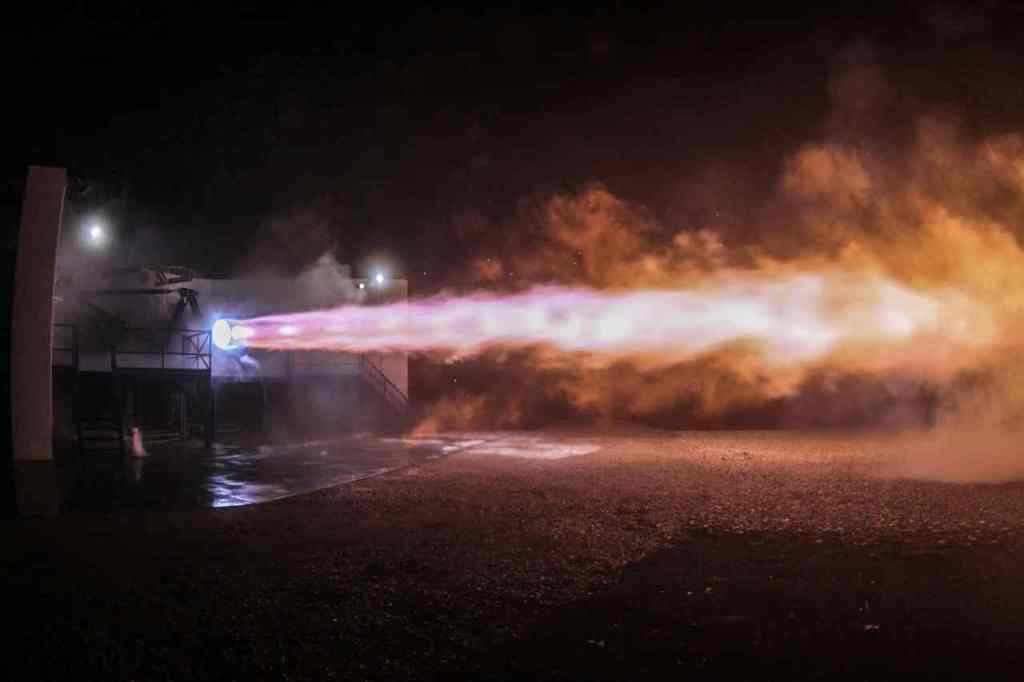
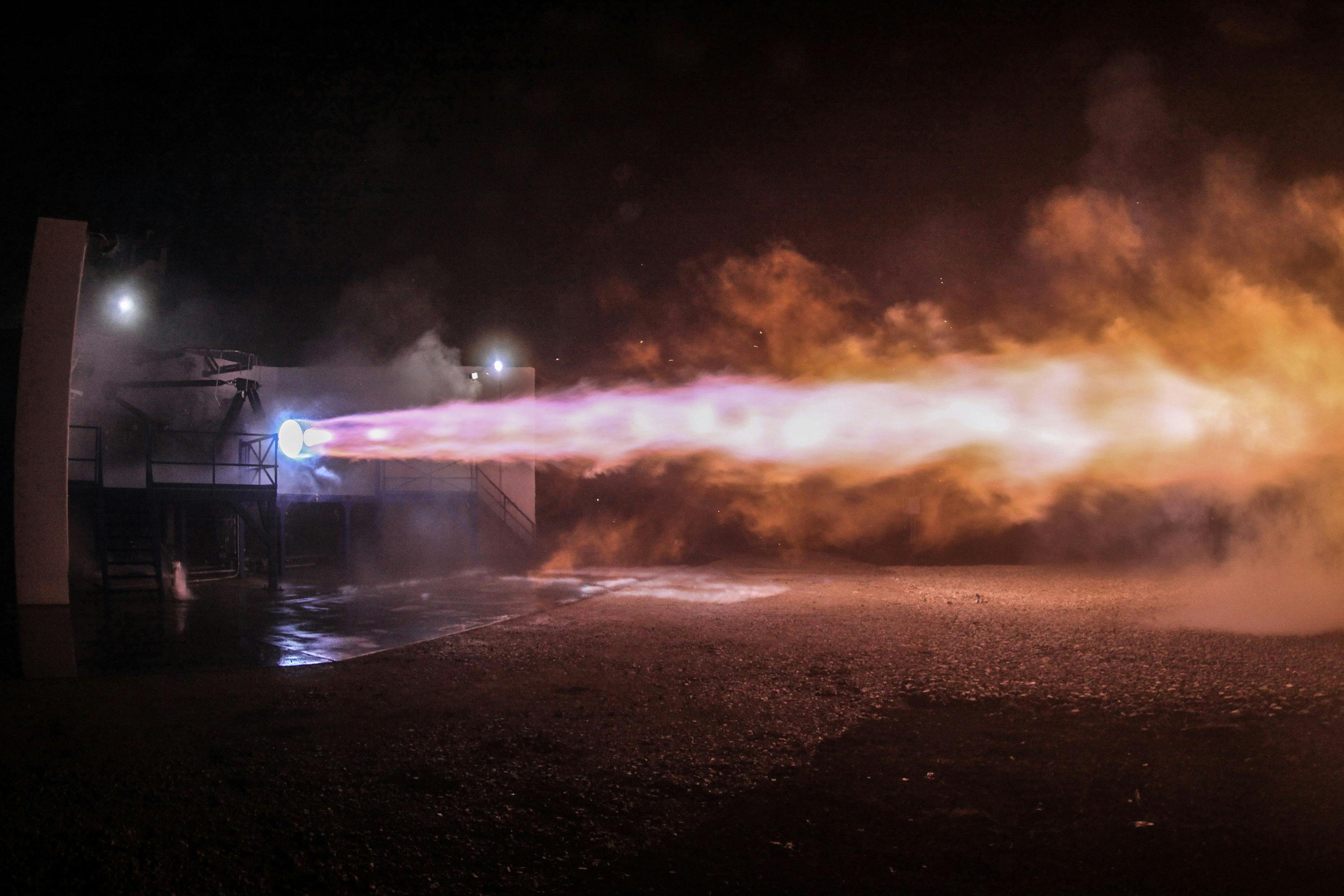
As we stand on November 11, 2025, the facts are clear: the BE-4 engines have proven their muscle in a demanding, full-duration static fire test, incorporating lessons learned from the first flight anomaly. The regulatory path is clear, contingent on this next flight’s success to cement the vehicle’s standing for high-priority national security missions. The stage is set for November 12th. **Key Takeaways & Actionable Insights for Tomorrow:** * The Engine is Ready: The BE-4’s 22 seconds at 100% thrust is the sector’s current benchmark for methane engine maturity in this thrust class. * Reusability is the Goal: Pay close attention not just to orbit insertion, but to the booster *re-entry* and *landing burn* sequence—that data dictates cost reduction. * Regulatory Clearance is Gold: The FAA waiver secured for the Nov. 12th launch signals the high priority of the ESCAPADE mission over short-term airspace scheduling concerns. The New Glenn rocket is more than just a vehicle; it is a massive, methane-burning laboratory proving out the next era of access to space. The question is no longer *if* it will fly, but *how cleanly* it will perform when the next window opens. What are you tracking most closely on the November 12th attempt? Is it the booster landing, the ESCAPADE trajectory to Mars, or the NSSL certification data? Share your prediction in the comments below!