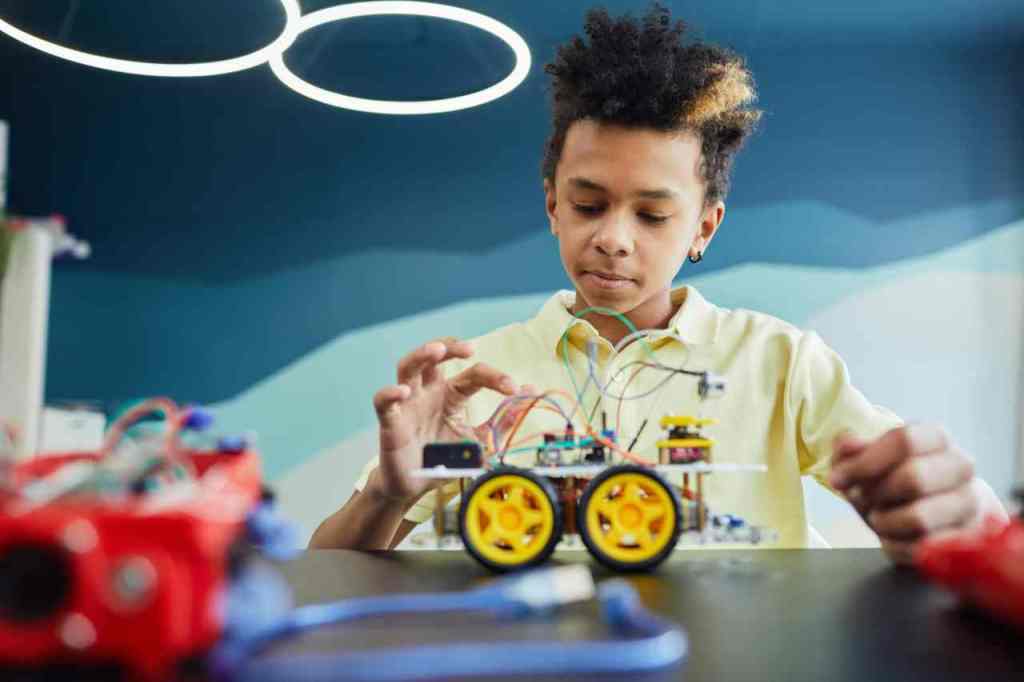

Building Tomorrow’s Innovators: Cultivating a Technologically Literate Global Workforce
The ultimate goal of any educational endeavor, especially one focused on advanced technologies, is to prepare students for the future. In an era increasingly shaped by artificial intelligence, this means cultivating a globally competitive and technologically literate workforce. “The Keyword” initiative, by equipping current university students with AI skills, is directly addressing this critical need. The landscape of work is changing, and rapidly. According to the World Economic Forum’s Future of Jobs Report 2025, 86% of employers anticipate AI having a transformative impact on their businesses by 2030. This isn’t just about jobs that are directly in AI development; it’s about how AI will augment nearly every role. Technology-related fields, including Big Data, Fintech, AI, and Machine Learning, are consistently cited as the fastest-growing job sectors. Professionals skilled in these areas are not just in demand; they are essential for driving innovation and ensuring businesses remain competitive in an increasingly digital economy. The insights from PwC’s 2025 Global AI Jobs Barometer are striking: AI is linked to a fourfold increase in productivity growth and a significant wage premium. Workers with AI-related skills command higher salaries, with premiums reaching 56% in 2024, a substantial jump from 25% the previous year. This indicates that acquiring AI proficiency is not merely an academic pursuit; it’s a direct pathway to better career opportunities and economic prosperity. The demand for skills is evolving at an unprecedented rate, with skills sought by employers changing 66% faster in AI-exposed jobs compared to others. This underscores the importance of continuous learning and adaptability. Beyond technical proficiency, the initiative aims to foster critical thinking, adaptability, and ethical awareness—qualities indispensable for navigating the complexities of the 21st-century job market. Students from all corners of the EMEA region are being positioned not just as participants but as leaders in the global technological revolution. By providing accessible AI tools, we ensure that the future workforce is not only equipped with the ‘how-to’ of AI but also the ‘why’ and the ‘when’—understanding its ethical implications and societal impact.
The AI Skills Imperative
The data is clear: AI skills are no longer a niche requirement; they are becoming a fundamental necessity across industries. The World Economic Forum’s 2025 report highlights AI and Big Data as the fastest-growing skill sets, closely followed by cybersecurity and general technological literacy. Employers are not just looking for individuals who can operate AI tools; they need problem-solvers who can leverage AI for analytical thinking, strategic planning, and creative solutions. This is where accessible AI in education plays a pivotal role. It provides students with a hands-on environment to develop these critical skills. For example, generative AI skills have seen an extraordinary surge in demand, nearly tripling within a year. This rapid growth means that students gaining early exposure and practical experience with tools like large language models are positioning themselves at the forefront of the job market. The goal of “The Keyword” initiative is to ensure that graduates are not just prepared for the jobs of today, but are adaptable and skilled enough to excel in the jobs of tomorrow, many of which may not even exist yet.
From Campus to Career: A Seamless Transition. Find out more about free AI tools university students EMEA.
The transition from university to the professional world is often challenging. However, when students graduate with practical experience in cutting-edge technologies like AI, that transition becomes significantly smoother. UE Dubai’s integration of Buddiz AI, for instance, aims to mirror professional consultancy practices, equipping students with the skills and mindset to excel. By using AI assistants to help frame questions, analyze results, and communicate insights, students learn to engage critically with AI outputs, a skill directly transferable to professional environments. This pragmatic approach to AI education ensures that graduates are not just theoretical experts but are immediately valuable assets to employers. They can hit the ground running, bringing with them an understanding of how to leverage AI to boost productivity, drive efficiency, and foster innovation within their organizations. The focus on AI literacy, critical thinking, and ethical awareness ensures these future professionals are well-rounded and prepared for the responsibilities that come with wielding powerful technologies.
Bridging the Divide: Fostering Educational Equity and Opportunity
At its core, “The Keyword” initiative is a powerful force for educational equity. The digital divide and the high cost of advanced technology have historically created significant disparities in educational opportunities, particularly in regions like Africa and parts of the Middle East. Students from less privileged backgrounds often found themselves at a disadvantage, unable to access the same tools and resources as their more affluent peers. This initiative seeks to fundamentally change that equation. By removing financial barriers to advanced AI tools, it opens doors that were previously out of reach. This democratization of technology ensures that talent and potential are recognized and nurtured, regardless of economic circumstance or geographical location. It levels the academic playing field, allowing brilliant minds from diverse backgrounds to compete and contribute on equal footing. The long-term impact is a more inclusive and diverse pool of future professionals and innovators, leading to more equitable societal development across the vast and varied regions it serves. The situation in the MENA region, for example, highlights the need for such initiatives. Before COVID-19, many students in the Middle East and North Africa were already at a disadvantage, with learning outcomes significantly behind global averages. The pandemic only exacerbated these issues, particularly for those without access to computers or high-speed internet. While efforts to build digital infrastructure and provide e-learning platforms are underway, cost remains a significant barrier. “The Keyword” directly addresses this by providing free access to the tools themselves, assuming students have basic access to devices and connectivity. This focus on providing the *tools* is a crucial step in bridging the technological gap.
Unlocking Potential, Everywhere
Consider a student in a rural village in Nigeria or a refugee camp in the Middle East. Without access to expensive software licenses, their ability to engage with advanced AI might be severely limited. However, if “The Keyword” provides free access to powerful AI platforms, that student can now explore machine learning, develop predictive models for local agricultural challenges, or even build AI-powered educational apps for their community. This is where the true power of democratization lies. This commitment to opportunity ensures that:
This initiative is more than just an educational program; it’s a socioeconomic enabler, fostering a future where opportunity is not dictated by one’s ability to pay for technology, but by their potential to innovate and lead.
Addressing the Digital Divide in Higher Education. Find out more about free AI tools university students EMEA tips.
While providing free AI tools is a massive step, it’s important to acknowledge that broader digital infrastructure challenges still exist. For higher education institutions in Africa, for instance, gaps in investment, digital literacy, and policy coherence can hinder full technological integration. Initiatives like “The Keyword” can be most effective when they complement broader efforts to improve internet access, provide devices, and enhance digital literacy training. However, by focusing on the *tools* themselves, the initiative significantly lowers the barrier to entry. Even with limited resources, students can gain invaluable experience that might otherwise be inaccessible. This empowers them to not only learn but also to contribute, fostering a sense of agency and inclusion within the global tech community. The long-term vision is one where educational attainment is less dependent on economic status and more on innate talent and drive.
The Horizon Ahead: A Continuous Evolution of AI Integration in Education
The field of artificial intelligence is not static; it’s a landscape of constant, rapid evolution. New models emerge, capabilities expand, and applications deepen with remarkable speed. For an educational initiative to remain relevant and impactful, it must be as dynamic and adaptable as the technology it champions. “The Keyword” is designed with this principle at its heart. This isn’t a one-and-done program. It’s envisioned as a living, breathing ecosystem that continuously adapts to new AI advancements and the evolving educational needs of students and institutions across the EMEA region. Through ongoing partnerships with academic institutions and leading technology providers, the initiative will consistently explore and integrate the latest AI capabilities. This ensures that students are not just keeping pace with technological development but are staying at its cutting edge. The integration of AI in higher education is a complex journey, fraught with both immense promise and potential pitfalls. Concerns about data privacy, algorithmic bias, intellectual property, and the ethical use of AI are paramount. As AI becomes more sophisticated, educational institutions must proactively address these challenges. This requires not only providing access to tools but also fostering a culture of responsible AI use, critical evaluation, and ethical awareness. The University of Jaén’s emphasis on AI literacy as an ethical imperative is a prime example of this forward-thinking approach. The commitment to continuous improvement means that “The Keyword” will remain a vital resource for empowering students. It will adapt its offerings, its training materials, and its partnerships to reflect the latest developments in AI. This ensures that students remain at the forefront of technological progress, prepared not just for the jobs of today, but for the unimagined opportunities of tomorrow. This adaptability is what will secure “The Keyword’s” long-term impact in shaping the future of education across the EMEA region for years to come.
Navigating the Ethical Landscape
As AI tools become more powerful and accessible, the ethical considerations surrounding their use grow in importance. Students and educators must be equipped with the knowledge to identify and mitigate potential biases in AI algorithms, understand the implications of data privacy, and engage with AI in a manner that upholds academic integrity and societal values. Initiatives like the European Union’s focus on “reliable AI” and its AI Act reflect a growing global understanding that technological progress must be paired with robust ethical frameworks. “The Keyword” initiative can play a crucial role by integrating modules on AI ethics, responsible data usage, and critical evaluation of AI-generated content. This ensures that students become not only proficient users of AI but also conscientious developers and deployers of the technology. For example, UE Dubai encourages students to critique AI outputs and evaluate its suggestions responsibly. This proactive approach to ethical AI education is vital for building trust and ensuring AI serves humanity’s best interests.
Staying Ahead of the Curve. Find out more about free AI tools university students EMEA strategies.
The rapid pace of AI development means that educational offerings must be agile. A curriculum developed today might be partially outdated by the time students graduate. This is why “The Keyword” must be more than just a repository of tools; it needs to be a dynamic learning environment. This involves:
By committing to this continuous evolution, “The Keyword” ensures its relevance and its capacity to empower students for decades to come. It’s about creating a learning ecosystem that grows and adapts alongside the transformative power of artificial intelligence itself.
Conclusion: Charting a Course for an AI-Empowered Future
The journey toward an AI-augmented future is well underway, and accessible AI in education is a cornerstone of this transformation. “The Keyword” initiative, by championing free access to advanced AI tools for universities across Europe, the Middle East, and Africa, is not just participating in this shift—it’s actively shaping it. We’ve explored how this democratization of technology serves as a powerful engine for innovation, empowering students to experiment and create without financial constraints. We’ve seen how it’s crucial for cultivating a globally competitive workforce, equipping graduates with the in-demand AI skills that command higher wages and drive economic growth. Crucially, we’ve recognized its profound impact on fostering educational equity, leveling the playing field for students from all backgrounds and unlocking untapped potential. And finally, we’ve emphasized the necessity of continuous adaptation in this rapidly evolving field, ensuring that the integration of AI remains dynamic, ethical, and at the cutting edge. As PwC’s 2025 Global AI Jobs Barometer suggests, AI is amplifying human ingenuity and democratizing expertise, rather than simply destroying jobs. The challenge, and the opportunity, lies in preparing our next generation to harness this power responsibly and effectively. With the right access and guidance, students across EMEA can become not just users of AI, but its architects, innovators, and ethical stewards.
Key Takeaways and Actionable Insights:. Find out more about Accessible AI higher education Europe definition guide.
The future is not just coming; it’s being built, right now, in university labs, lecture halls, and digital learning spaces across the EMEA region. By championing accessible AI, we are investing in a generation of thinkers, creators, and leaders who will shape a more innovative, equitable, and prosperous world. What are your thoughts on the role of AI in your field of study or work? How can educational institutions best prepare students for an AI-driven future? Share your insights in the comments below!