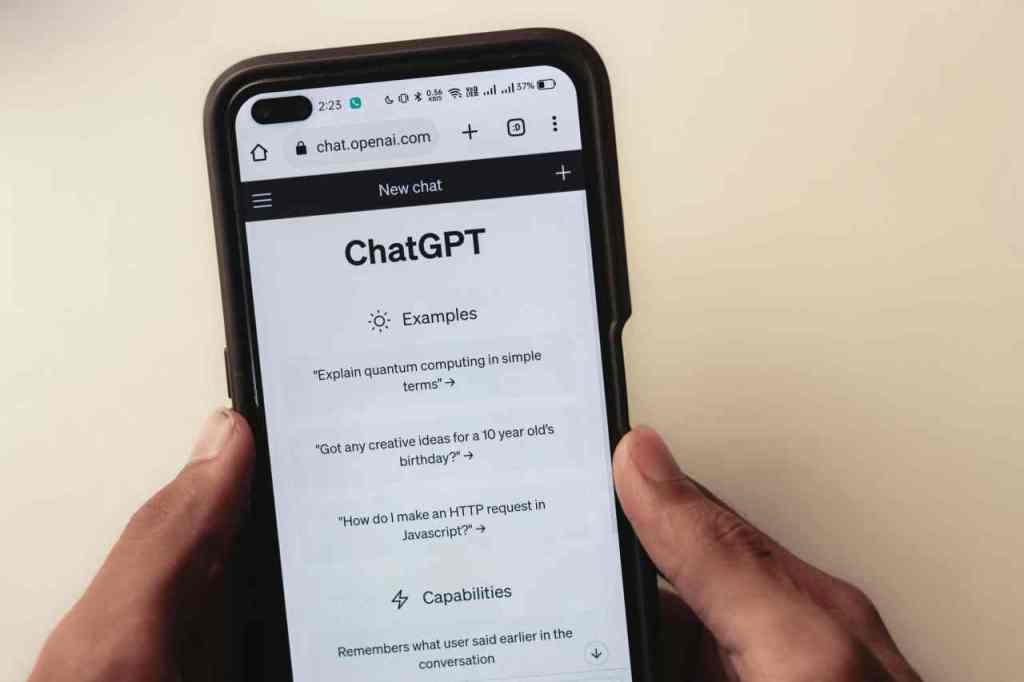
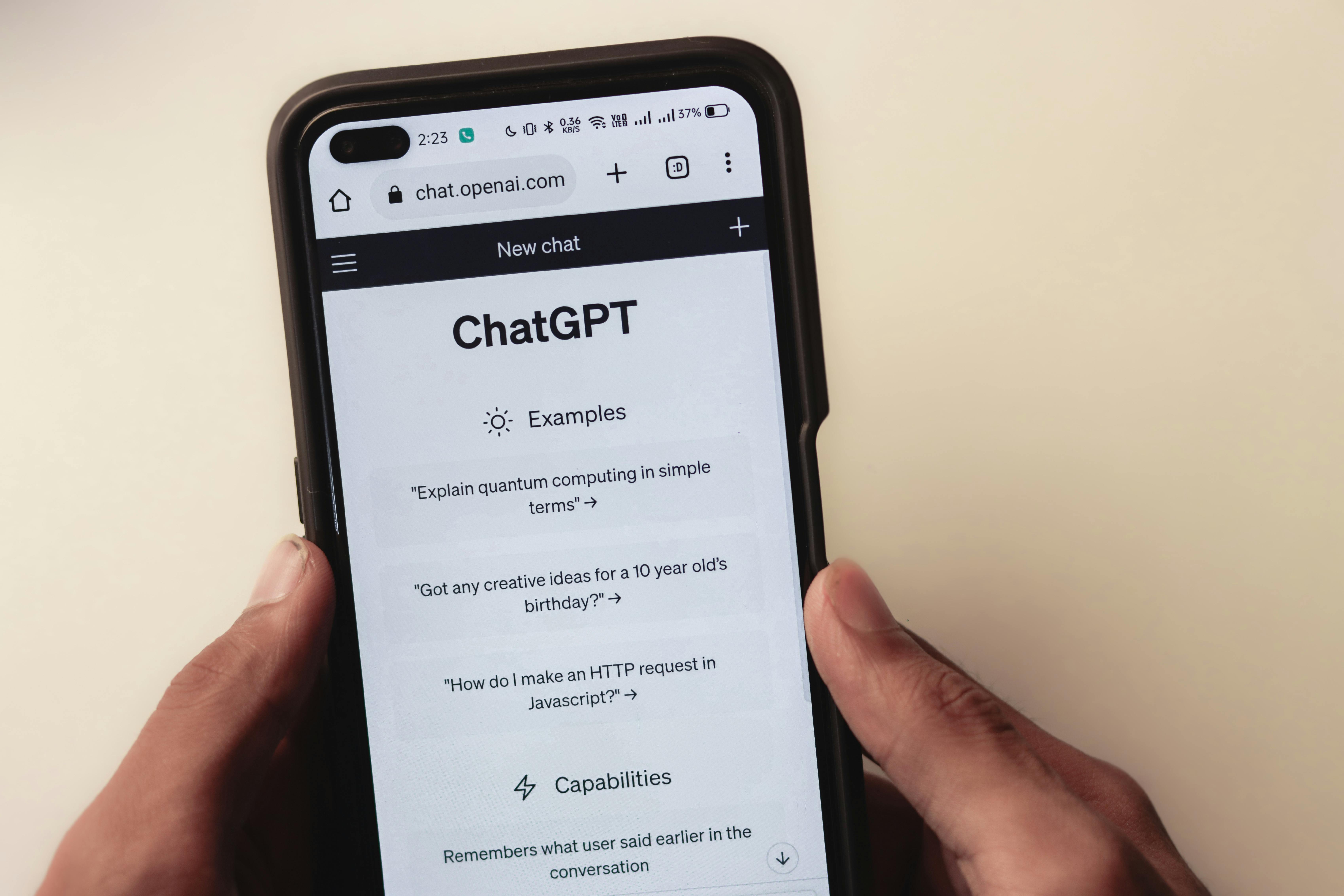
The Browser as the New Frontier of Interface Control: Introducing ChatGPT Atlas
The strategy to own the consumer experience is further cemented by a move to control the very mechanism of internet access itself, signaling a direct challenge to incumbents in the browser market. This move is a clear declaration that the AI layer *must* sit directly on top of the connection to the internet.
Introduction of ChatGPT Atlas: The AI-Powered Operating Shell
The unveiling of ChatGPT Atlas, an AI-powered web browser, marks a critical point in this evolution. Announced on October 21, 2025, Atlas was initially launched for the macOS environment, with broader platform releases anticipated for Windows, iOS, and Android later. Atlas is designed to run the AI assistant concurrently with the browsing session, often in a split-screen view, a feature that leverages its native operating system integration. This allows for real-time summarization of viewed pages, in-place text rewriting via cursor selection, and instant lookups, all without leaving the primary interface. The launch, featuring key figures like Ben Goodger—who helped develop Google Chrome—signals a direct assault on browser dominance.
The Strategic Advantage of Controlling the Full Technology Stack
Influencers and analysts have quickly identified the fundamental strategic advantage of this move: by developing its own browser, the organization controls the entire technology stack—from the underlying models to the rendering engine and the application layer. This end-to-end control allows for deeper, more native integration of agentic capabilities and memory functions compared to competitors that must rely on wrapping existing browser technology. This is viewed by some as a clear attempt to build the “Apple of AI,” creating a proprietary ecosystem where the best experiences are locked within the company’s own software suite. As one analyst noted, the goal is to optimize and streamline the user interface by owning it.. Find out more about AI-native content network development.
Memory, Personalization, and the Walled Garden Concept
A key feature of Atlas is its integration with ChatGPT’s persistent browser memories system, enabling the browser to recall previous browsing habits and user preferences to deliver hyper-personalized results and news feeds. While settings allow users to review or delete this memory, the default setting pushes toward a highly tailored browsing environment. This personalization, while convenient, further solidifies the “walled garden” aspect, encouraging users to remain within the controlled environment for the most intuitive digital experience. For those concerned about data, the organization’s documentation confirms that, by default, browsing content is not used to train future models, though users can opt-in.
Leadership Reinforcements for Mass Market Penetration
The execution of such an ambitious pivot requires specialized leadership capable of translating raw AI power into polished, scalable consumer applications, a need that has been addressed through high-profile executive recruitment in late 2025.
The Appointment of a Consumer Applications Titan. Find out more about AI-native content network development guide.
The decision to bring in seasoned executive talent underscores the seriousness of this shift. While the prompt describes a general “Consumer Applications Titan,” concrete data shows a major reinforcement in September 2025 when Vijaye Raji, Statsig’s founding CEO, was appointed as the Chief Technology Officer of Applications. This move signals that building world-class consumer interfaces and scaling those products efficiently is now as high a priority as core model training. The mandate for this new leadership is clear: unify the operational and business teams responsible for moving foundational research into the hands of the general public. Other executives, like Fidji Simo, CEO of Applications, are tasked with accelerating revenue and scaling consumer tools.
Targeting Search, Discovery, and Shopping Verticals
The specific background of this new leadership strongly suggests a direct offensive against established incumbents in several key digital arenas. The challenge to traditional search engines is already apparent as users increasingly turn to chatbots for initial information gathering, especially following the launch of AI-powered search tools. By layering on sophisticated e-commerce capabilities—like the Operator Agent—the organization is moving to close the loop entirely, aiming to manage the entire sequence from initial question through product discovery to final transaction, effectively attempting to disintermediate established digital advertising and retail pathways. This dual focus is financially secured by its enterprise foundations, which include deep dives into high-value domains like investment banking through initiatives like Project Mercury.
Navigating the Evolving Competitive Gauntlet
The organization’s expansion into social communication and broad consumer platforms necessarily brings it into direct confrontation with the established titans of the communication and social networking world, creating an intensified field of competition. The stakes are enormous; the company recently secured a share sale valuing it at $500 billion, making it the world’s most valuable private company.. Find out more about AI-native content network development tips.
Escalating Tensions with Existing Social Titans
This strategic direction brings the organization into a more direct and perhaps contentious relationship with rivals who have long controlled the distribution of attention and the creation of social data. The situation is notably complicated by the ongoing and publicly aired antagonism with a prominent figure who was once a co-founder and early investor. This figure’s competing AI venture is simultaneously leveraging data from its own social platform, creating a clear, high-stakes rivalry for market leadership in the intersection of generative AI and real-time social discourse. When competitors like Perplexity AI launch their own intelligent browsers, the competition for the “next-gen” platform heats up.
The Parallel Trajectories of AI and Social Media Integration
It is important to note that the organization is not operating in a vacuum; its major competitors are executing similar strategic maneuvers. Other large technology conglomerates are rapidly embedding advanced artificial intelligence features into their existing social, video, and messaging applications. This confirms that the industry consensus views the fusion of generative AI capabilities with established large-scale social distribution networks as the next major battleground for digital dominance, pushing all major players toward an “AI brand” identity for consumers. Even incumbents are fortifying their positions; Google integrated its Gemini AI model directly into Chrome in September 2025 to counter threats like Atlas.
The Multifaceted Vision for the ChatGPT Platform
The overarching theme connecting the social, commerce, and browser initiatives is the desire to elevate the core application from a responsive tool to a central, guiding operating environment for a user’s digital life.. Find out more about AI-native content network development strategies.
Conceptualizing the Interface as a Unified Operating System
Executives have articulated a vision where the flagship application evolves beyond merely being a conversational chatbot into a truly multifunctional platform, drawing parallels to the role of a traditional operating system. In this view, the application would serve as the command center, facilitating diverse workflows and seamlessly connecting users to various services, applications, and data streams via its integrated agentic abilities. The goal is to move from being a utility to being the *default* environment for all digital interaction.
Expanding Modalities Beyond Text to Visual and Auditory Domains
The evolution is not purely functional; it is also deeply multimodal. The organization has already demonstrated significant capabilities in generating short-form video content from textual prompts—such as with Sora—and recent reports suggest an active effort is underway to develop equally powerful AI capable of generating original music. This holistic approach—mastering text, image, video, and sound generation—is foundational to creating a rich, engaging, and sticky consumer platform that satisfies a wide spectrum of creative and informational needs. A key feature of the new browser, Atlas, is its ability to handle visual and text tasks seamlessly within the browsing context.
Balancing the Consumer Push with Enterprise Foundations. Find out more about AI-native content network development overview.
While the current buzz centers on the consumer-facing leap—the social network, the browser, the agent—the organization’s sustained financial health and its ability to develop the next generation of foundation models remain inextricably linked to its high-value enterprise contracts. This dual strategy is the only way to fund the massive computational requirements of advancing towards artificial general intelligence (AGI).
Continued Deepening of Verticalized Business Solutions
Even as consumer applications are prioritized for immediate user engagement, high-level announcements detail a “huge focus” on accelerating growth in the enterprise sector. This involves forging deep, vertical-specific collaborations with established firms across industries like entertainment, real estate, and consumer goods to embed tailored AI tools directly into business operations and customer-facing workflows. This dual strategy hedges against the volatility of the consumer market while securing high-margin contracts necessary for research funding. A recent example is the $4 billion credit facility secured from JPMorgan Chase to back these larger initiatives.
The Transformation of Knowledge Work Through Specialized AI
Further evidence of the commitment to the enterprise sector comes from efforts to apply the technology to highly complex, high-revenue domains such as finance. Reports indicate the hiring of numerous former investment bankers to train models specifically on the intricate tasks of building and interpreting financial models. This demonstrates a commitment to transforming high-value, white-collar roles by enabling analysts to shift from foundational building to higher-level review and customization, ultimately aiming to increase individual productivity across major corporations. Research indicates that current chatbot use is seen more as an “accelerant” to existing careers than a substitute, supporting this augmentation goal.. Find out more about Autonomous transactional agent capability definition guide.
Sustaining Exponential Growth Projections and Financial Viability
The organization’s projected revenue growth, reaching potentially tens of billions in the coming years, hinges on the success of both these arms—the consumer ecosystem capturing attention and subscriptions, and the enterprise arm securing large-scale, high-value licensing deals. The overarching narrative of this “Facebook Era” pursuit is the development of a dominant ecosystem that generates engagement and data at scale, which in turn funds the increasingly expensive research into future artificial general intelligence, creating a self-reinforcing cycle of technological leadership and market capture. The company’s recent share sale, valuing it at $500 billion, proves the market is already betting heavily on this integrated strategy succeeding.
Key Takeaways and Actionable Insights for Navigating 2025+
The current landscape is defined by consolidation and control—control over the interface (the browser), control over the creation (AI-native social), and control over the transaction (the Agent). Here are the essential takeaways as we move forward:
- Embrace the Agentic Workflow: If you are not experimenting with autonomous agents for research compilation, data analysis, or even simple purchasing tasks, you are already falling behind. Start by identifying one repetitive, multi-step digital task and see how an agent-enabled tool like ChatGPT Atlas Agent Mode can handle it.
- Data is the New Moat: Understand that the most valuable data for future AI models will be proprietary, high-quality, and contextually rich. For content creators, this means moving from generic sharing to prompt-driven, synthetic content that feeds this new flywheel.
- The Browser is the New Front Page: Google Chrome’s dominance is under direct threat from AI-native browsers. Audit your web presence now to ensure it is easily navigable and summarizable by AI sidebars and agents. Content owners must prepare for a future where bots, not just humans, are the primary visitors to their sites.
- Prepare for Re-Intermediation: If you run an e-commerce business, your direct relationship with the customer is now challenged by the AI agent layer. Focus on optimizing product listings and data schemas for AI discovery rather than relying solely on traditional ad funnels.
The convergence of social interaction, agentic task completion, and dedicated interface control is the core narrative of late 2025. This isn’t a slow evolution; it’s a rapid architectural re-platforming. Are you ready to direct the content stream, or will you be directed by someone else’s algorithm?
What single task are you planning to hand over to your autonomous agent first? Let us know in the comments below!