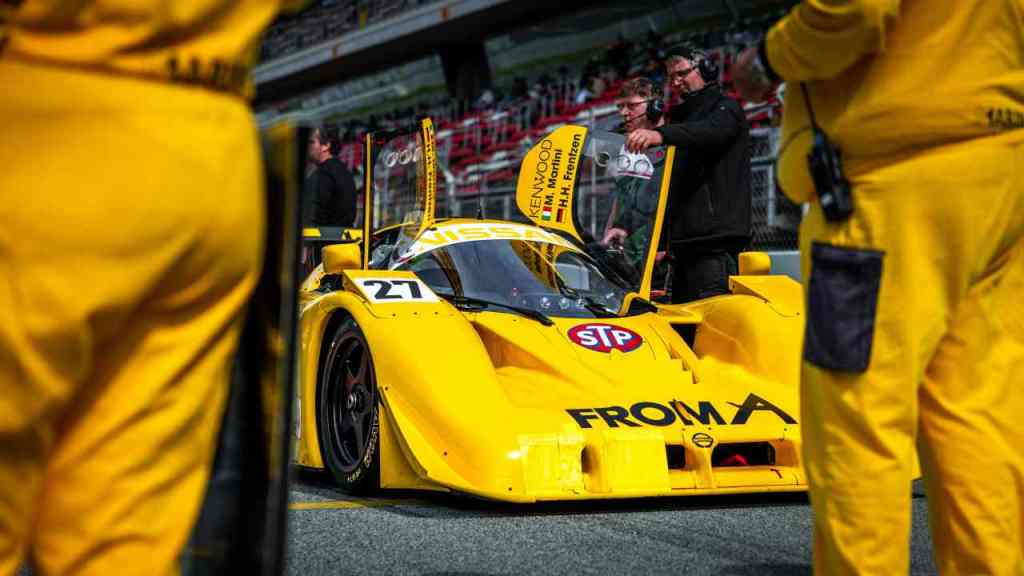

The Human Variable: Optimization on the Edge of Limits
Technology and environment set the boundaries, but the human element—the driver and the pit crew—must operate within that razor-thin window of optimization. This is where the “effort” truly synthesizes with the external factors.
The Driver as a Fine-Tuned Instrument
The contemporary driver must possess a level of physical and mental acuity that rivals elite military pilots. They are managing a machine that generates massive G-forces while simultaneously ingesting real-time data, making split-second tactical decisions, and managing highly complex hybrid power units.
Consider the skillset required to handle a car where performance peaks—the very moment the engine map is aggressive, the tires are at their optimal temperature, and the driver is hitting the apex at the calculated limit.. Find out more about Detailed morning vehicle preparation in professional racing.
- Cognitive Load Management: The driver must consciously compartmentalize the environmental inputs (heat, tire feel) from the technological inputs (MGU-K deployment, brake bias adjustment) without letting the overall cognitive load cause a fractional error.
- The Feedback Loop: A top driver doesn’t just feel the car slide; they *feel* the data shift. They sense the subtle change in energy deployment, allowing them to communicate data validation to the engineers.
- Adaptation Speed: When the mist clears unexpectedly fast, or the track temperature jumps five degrees during a safety car period, the driver must instantly recalibrate their entire reference frame.
This constant, high-frequency adaptation is why the training programs for professional racers are now deeply integrated with neuro-performance coaching. It’s about extending the duration they can operate at the peak of their abilities.. Find out more about Detailed morning vehicle preparation in professional racing guide.
The Pit Stop: A Study in Team Synchronization
The 20-man pit crew executing a sub-two-second tire change is the physical embodiment of synchronized effort. This process relies on pre-programmed choreography that must withstand the chaotic environment of the pit box.
A prime example is pit stop timing accuracy. Every crew member’s movement is timed and drilled. If the incoming car is slightly off its braking marker due to a wet patch that developed just before the pit entry—an environmental factor—the crew must still execute their pre-rehearsed sequence with flawless timing relative to the *actual* car position, not the expected one.
Actionable Tip for Application Elsewhere:. Find out more about Detailed morning vehicle preparation in professional racing tips.
The key takeaway from pit crew synchronization is the concept of “Anticipatory Precision.” They do not wait for the car to stop perfectly; they move *as* the car approaches the mark. This requires:
- A shared, unwavering understanding of the goal state.
- Pre-commitment to action based on trajectory, not just final position.
- Redundant communication channels to confirm state changes.
This discipline, born from the need to service cutting-edge machinery under immense time pressure, is a powerful model for operational efficiency benchmarks in any high-stakes environment.. Find out more about Optimizing engine performance during pre-race grid procedures strategies.
The Final Shudder: The Moment the Synthesis Ignites
We return to that moment—the final moments before the race proper begins. The engine settles, the telemetry feed stabilizes, the track is dry, and the driver takes a final breath.
This is the instant where the equation’s variables—Team Effort + Environmental Data + Engineered Limits—resolve into a single, kinetic outcome. The machine is optimized to the very edge of its design because every potential failure point, every environmental uncertainty, has been modeled, measured, and mitigated by human intelligence.
The sound is no longer a hum; it’s a compressed wave of potential energy. The subtle vibration felt through the soles of your feet when the engine revs for the final time is the last shared, predictable rhythm. After the signal drops, the unpredictable, high-speed ballet commences, a dance governed by the successful synthesis achieved in the quiet morning hours.. Find out more about Detailed morning vehicle preparation in professional racing overview.
The casual observer sees speed; the informed enthusiast sees the flawless execution of a thousand preceding, invisible decisions. The gap between the front-runners and the rest of the field in this 2025 era is rarely a matter of raw horsepower anymore—it’s a measure of organizational fluency in managing the synthesis.
Conclusion: Beyond the Checkered Flag—Key Takeaways for Total Optimization
The theater of professional racing today is a masterclass in managing complexity. The transition from the quiet potential of a misty morning to the full-throttle reality of the race is not luck; it is the triumph of preparation over probability.
To distill this complex operation into actionable insights applicable beyond the racetrack, focus on these three pillars of modern synthesis:. Find out more about Optimizing engine performance during pre-race grid procedures definition guide.
Key Takeaways:
- Embrace Data Granularity: Don’t just collect data; ensure your systems—whether in engineering, logistics, or project management—can process millions of data points per second to gain *predictive* rather than *historical* insight.
- Quantify External Variables: Treat natural or external constraints (like weather, market fluctuations, or regulatory shifts) as quantified variables in your strategic planning, not just as risks to be avoided. Actively model the impact of their extremes.
- Engineer for Consistency, Not Just Peak: As seen with the evolved tire compounds, true competitive advantage often comes from removing the “cliff” by engineering for sustained, reliable performance over a longer duration, even if it means slightly sacrificing the absolute highest peak.
The next time you see that roar erupt from the grid, remember the work done in the quiet. It’s the meticulous, often invisible, orchestration of effort, environment, and engineered precision that truly defines success in the mid-twenty-first century competitive landscape.
Call to Action: What’s Your Synthesis?
In your own field, what is the “mist” you have to overcome every day—the unpredictable factor that your team must prepare for? How are you using real-time data analysis to shift your strategy from reactive fixes to preemptive optimization? Share your thoughts in the comments below—the discussions around strategic decision frameworks are where the real gains are found.
For a deeper dive into how data informs on-track decision-making, review our analysis on race strategy execution models. And to see how modern motorsport is handling extreme environmental pressures, look at our breakdown of the motorsport fuel efficiency advancements and the continuing push for sustainable energy in the sport.