
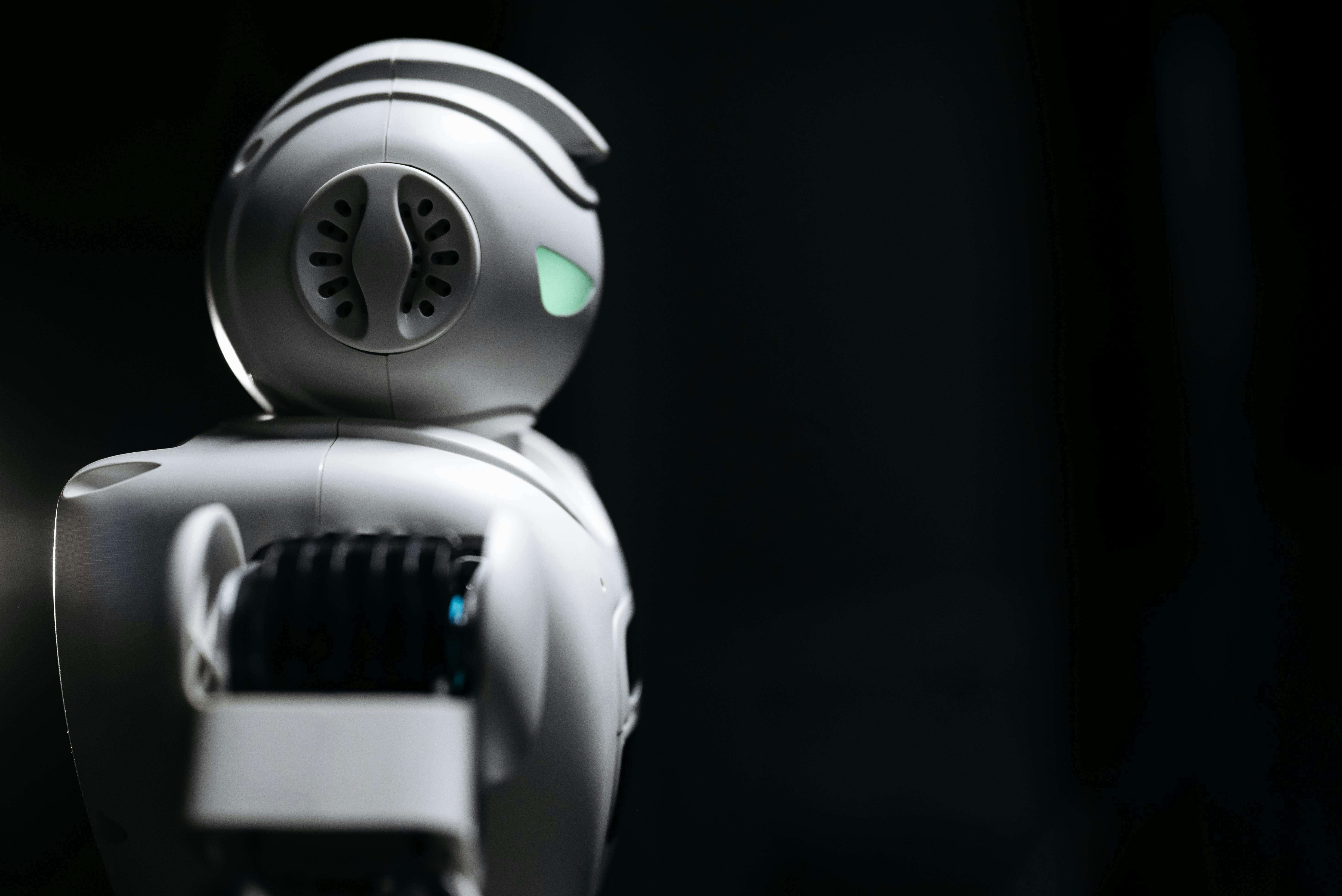
The Market Mirror: Lessons from Hardware’s Frontier
The challenges faced by OpenAI and Jony Ive are not happening in a vacuum. The nascent market for AI-first computing has already seen its share of spectacular failures, serving as stark warnings to ambitious newcomers. The most prominent example is the Humane AI Pin. Launched in April 2024, this wearable AI device, also developed by former Apple designers, promised to revolutionize personal technology [cite:1 from search 3]. Priced at $699, with an additional $24 monthly subscription, it aimed to replace smartphones with a screenless, AI-powered alternative [cite:4 from search 4].
However, the Humane AI Pin was met with widespread criticism. Reviews highlighted poor performance, laggy responses, a lack of intuitive functionality, and a high price point that didn’t align with its capabilities [cite:5 from search 3, cite:4 from search 4]. By mid-2024, returns were outpacing sales, with only about 7,000 units reportedly still in use out of an initial 10,000 shipped [cite:2 from search 2]. Technical limitations, including cellular connectivity issues that prevented device refurbishment, and even a fire risk associated with its charging case, compounded its problems [cite:1 from search 1, cite:2 from search 2]. In February 2025, after failing to secure a buyer at its earlier $1 billion valuation, Humane announced it was ceasing AI Pin sales and selling most of its assets, including its software and patents, to HP for $116 million [cite:3 from search 3]. The functional lifespan of existing devices also ended abruptly in February 2025 [cite:3 from search 3].. Find out more about OpenAI Jony Ive AI device delay.
The demise of the Humane AI Pin serves as a critical cautionary tale. It underscores the immense difficulty of bringing novel hardware to market, the importance of demonstrating clear, practical value to consumers, and the need for robust, reliable technology. This history undoubtedly influences the cautious approach reportedly being taken by the OpenAI-Jony Ive development team. While this caution is necessary for long-term success, it also contributes to the uncertainty surrounding the ‘io’ device’s eventual release and its final form.
Broader Implications: OpenAI’s Hardware Ambitions and the AI Ecosystem
The ‘io’ project is far more than just another gadget; it’s a critical pillar in OpenAI’s ambitious strategy to expand beyond its dominance in AI software. Success here would solidify its position as a leader in defining the future of AI-first computing, a space hotly contested by giants like Google, Meta, and Apple [cite:1 from search 1]. Any significant delay or failure could impact its first-mover advantage in a market that is still very much in its formative stages. As of 2025, the AI hardware market is experiencing unprecedented growth and innovation [cite:1, cite:2, cite:3, cite:4, cite:5 from search 2]. This includes a surge in demand for high-performance GPUs, specialized AI chips (like NPUs and TPUs), and custom silicon designed for complex machine learning models [cite:1, cite:2 from search 2, cite:3 from search 3]. There’s a clear trend towards edge AI, where processing happens locally, and increased investment in data center capacity. OpenAI’s entry into this hardware arena, especially with a device designed for ambient interaction, could set a new precedent or face significant headwinds from established players with deep hardware expertise and existing infrastructure.. Find out more about OpenAI Jony Ive AI device delay guide.
The race to define the next era of computing is on. Companies are investing billions not just in AI models, but in the hardware that powers them and the devices that deliver them to consumers. OpenAI’s move into hardware is a strategic imperative, aiming to capture a larger share of the future technology landscape. The ‘io’ device, if successful, could represent a paradigm shift; if it falters, it could represent a costly misstep that emboldens competitors.
Financial Stakes and Justification: The Billion-Dollar Bet
The $6.5 billion acquisition of Ive’s company, io, was predicated on the belief that OpenAI could surmount the engineering and design challenges inherent in creating a new category of AI devices. This substantial financial outlay places significant pressure on the project to deliver a revolutionary product. While sources close to OpenAI suggest that the current technical roadblocks are “normal components of product development” [cite:1 from search 1, cite:2 from search 2], the scale and nature of these problems—encompassing AI personality, privacy, and fundamental compute infrastructure—indicate a complex and potentially protracted journey ahead. Justifying such a massive investment requires not just a functional product, but a paradigm-shifting one that captures the market’s imagination and demonstrates clear superiority over existing solutions.. Find out more about OpenAI Jony Ive AI device delay tips.
The financial justification also ties into OpenAI’s valuation. The company recently reached a reported valuation of $500 billion, making it the world’s most valuable private firm [cite:3 from search 3]. Sustaining and growing this valuation requires tangible product successes that extend beyond research papers and software demos. Hardware, with its tangible impact and revenue potential, is a logical next step, but the financial risk is immense. The potential return on investment hinges on successfully navigating these intricate technical and design challenges.
The Path Forward: Resilience, Iteration, and a New Computing Era
Despite the current setbacks, the ‘io’ project is characterized by a spirit of determined innovation. The teams are actively engaged in addressing the core issues, exploring various design iterations and technical solutions. The development of this device represents a pioneering effort to create something truly unlike anything currently available on the market. The inherent complexity of integrating advanced AI with intuitive, screenless hardware means that the path to a polished product is likely to be iterative and demanding.. Find out more about OpenAI Jony Ive AI device delay strategies.
The ongoing work focuses on refining the AI’s contextual understanding, enhancing its conversational abilities, and fortifying its privacy safeguards. These are not trivial tasks; they involve deep research and development across multiple disciplines. The vision behind the OpenAI-Jony Ive collaboration remains compelling: to usher in a new computing era where artificial intelligence is a seamless, ambient part of daily life. While the road has proven more arduous than anticipated, the commitment to solving these intricate problems highlights the potential for a transformative impact on how humans interact with technology in the future.
The sustained efforts underscore that building truly novel hardware, especially at the intersection of sophisticated AI and user experience design, is a monumental undertaking that requires sustained innovation and perseverance. The lessons learned from past hardware fumbles, coupled with the intense market competition, mean that OpenAI and Ive’s team must deliver not just a functional device, but a category-defining one to justify the immense investment and realize their ambitious vision.
Key Takeaways and Actionable Insights. Find out more about OpenAI Jony Ive AI device delay technology.
The saga of OpenAI’s AI device project, as of October 2025, offers invaluable lessons for anyone interested in the future of technology, innovation, and market dynamics:
- Hardware is Hard (and Expensive): Developing cutting-edge hardware is a capital-intensive and technically demanding endeavor. The $6.5 billion bet on the ‘io’ device highlights this, as do the struggles of companies like Humane.
- AI Personality is Crucial: For ambient AI to succeed, its “personality” and interaction style must be impeccably balanced. It needs to be helpful without being intrusive, intelligent without being overbearing. This is a significant UX challenge that goes beyond raw AI capability.. Find out more about AI first computing hardware challenges technology guide.
- Privacy is Non-Negotiable: As devices become more integrated into our lives, privacy concerns amplify. Companies must build robust privacy safeguards and transparent policies from the ground up to gain consumer trust.
- Compute Infrastructure is King: Advanced AI requires massive computational power. Companies lacking their own dedicated infrastructure face significant hurdles in scaling AI experiences, especially for consumer hardware.
- Market Validation is Key: The failure of products like the Humane AI Pin demonstrates that groundbreaking technology isn’t enough. It must solve a real consumer problem, offer clear value, and be priced appropriately to gain market traction.
The journey of the ‘io’ device is far from over. It represents a critical juncture for OpenAI and the broader AI hardware market. As development continues, the industry will be watching closely to see if this ambitious partnership can overcome its current obstacles and truly usher in the next era of computing. Will it redefine our relationship with technology, or will it become another chapter in the complex history of ambitious hardware ventures?
What are your thoughts on the challenges facing OpenAI’s AI device? Do you believe screenless, ambient AI is the future? Share your insights in the comments below!