OpenAI’s House of Cards: Unprecedented Burn Rate and The Specter of Market Collapse
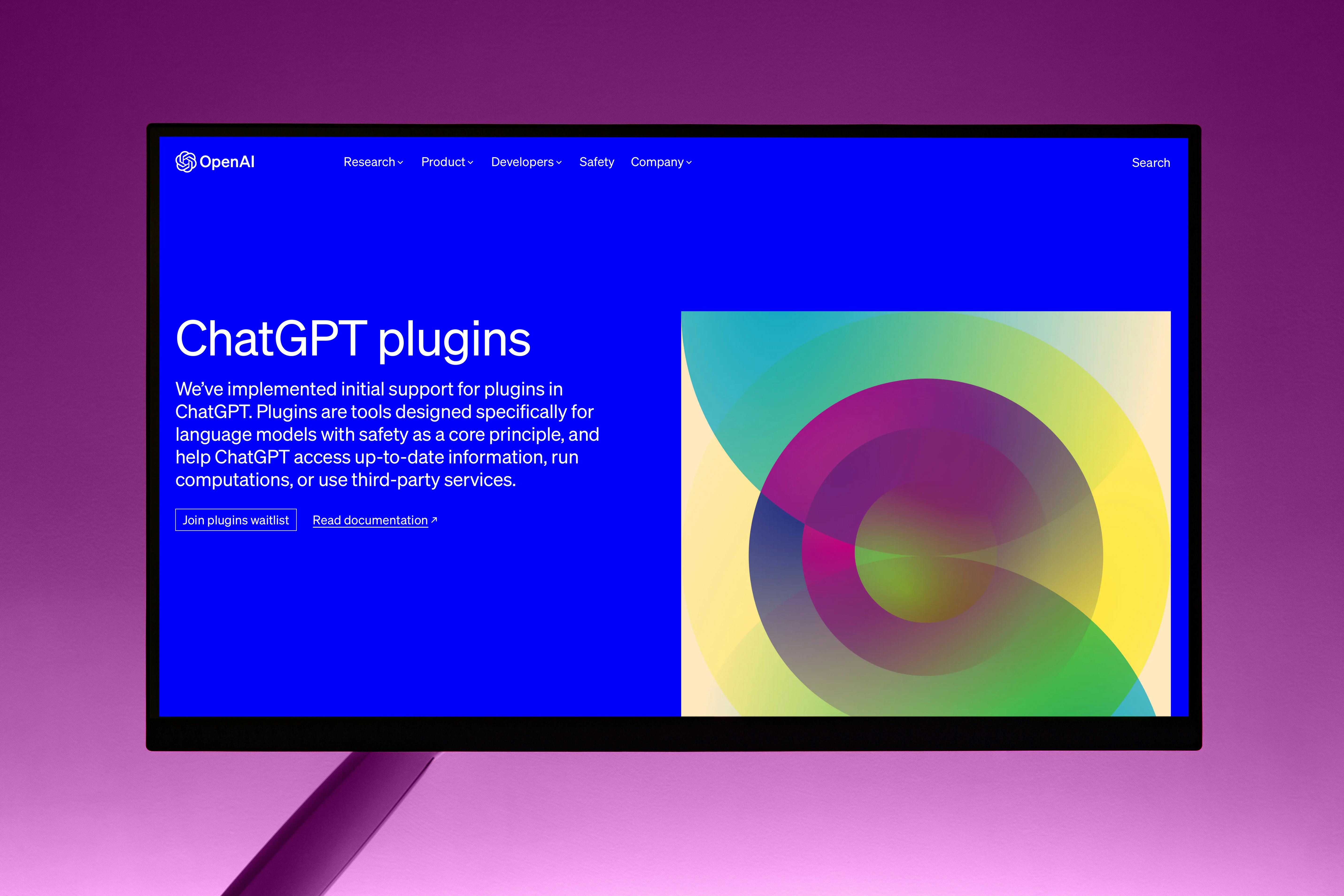
The narrative surrounding OpenAI at the close of 2025 has shifted dramatically from one of undisputed technological hegemony to one fraught with financial peril. While the foundational models introduced by the organization fundamentally redefined the digital landscape, the economic structure supporting this innovation appears increasingly fragile. Financial commentators, many echoing sentiment from recent investigative pieces, suggest that the company is operating on a trajectory that defies established norms for high-growth enterprises, priming its highly valued structure for a potential, spectacular collapse. This analysis explores the critical financial pressures, the emerging competitive dynamics, and the historical parallels that frame OpenAI’s current, precarious position.
Broader Sector Implications and Future Trajectory
The core concern in late 2025 is not merely one of execution, but of fundamental unit economics. The pursuit of Artificial General Intelligence (AGI) at the frontier level, as undertaken by OpenAI, has demonstrated an appetite for capital that appears to be fundamentally unsustainable under current monetization curves. The entire artificial intelligence sector is now watching to see if this model—pioneering revolutionary, yet astronomically expensive, technology—can be salvaged before the capital well runs dry or a superior, more capital-efficient competitor seizes the lead.
The MySpace Analogy: A Warning Against Early-Adopter Dominance Without Monetization
The current trajectory has led several financial commentators to draw direct parallels between the organization’s situation and the fate of early digital giants that failed to translate initial cultural dominance into enduring economic success, most notably citing the trajectory of MySpace. The core of this analogy rests on the organization’s inability to successfully monetize its vast initial user adoption, resulting in a powerful brand that is increasingly unable to break away from the pack once capable alternatives emerge. The argument posits that if the expected exponential revenue growth does not materialize rapidly enough to cover the current astronomical operational expenses, the company risks becoming a historical footnote—the platform that demonstrated the possibility of generative AI but failed to capture the value of it.
The historical warning, exemplified by MySpace’s fall to a more rapidly iterating Facebook, is that initial market penetration is not an economic moat; continuous, superior value delivery is. As of 2025, OpenAI has seen its early lead evaporate, culminating in a series of blows throughout the year, including the significant competitive challenge posed by models like China’s DeepSeek.
- Competitive Erosion: In 2025, OpenAI reportedly fell behind key rivals, with its flagship model, GPT-5, failing to meet high expectations, while competitors rapidly closed the technological gap.
- Monetization Friction: Recent monetization attempts, such as introducing controversial, intrusive app suggestions within the premium tier of ChatGPT, generated significant user backlash, leading to perceptions of manipulation and trust erosion.
- Innovation Stalling: The perceived failure of GPT-5, coupled with the abrupt removal of the well-received GPT-4o model, fueled accusations of a “bait-and-switch,” undermining the user base that is crucial for future subscription revenue.
The fear is that OpenAI is currently in a race against time, where the cost of maintaining technological relevance is outpacing the market’s willingness to pay a premium for that relevance. The fate of MySpace serves as a stark reminder that first-mover advantage, without continuous product superiority and sustainable business model iteration, is fleeting.
The Uncharted Territory of Startup Losses on an Unprecedented Scale
Ultimately, the situation represents a significant deviation from established norms for high-growth private enterprises, pushing the boundaries of what the financial ecosystem is willing to sustain indefinitely. No startup in recorded history has operated with projected losses on the scale currently attributed to this organization, making its financial blueprint entirely unique and, by traditional metrics, fundamentally risky.
The Astronomical Burn Rate and Compute Commitments
The scale of capital required to train and deploy frontier models is reshaping investment thresholds. While CEO Sam Altman maintains an optimistic outlook, projecting multi-hundred-billion-dollar revenues by 2030, the current reality is a company burning through capital at a rate previously reserved only for national defense projects or national infrastructure build-outs like highway systems, but over a vastly compressed timeline.
The figures emerging from financial disclosures paint a stark picture of this capital intensity:
- Cumulative Loss Projections: Deutsche Bank analysts project that OpenAI is set to accrue approximately $143 billion in negative cumulative free cash flow between 2024 and 2029 before it is expected to begin generating a profit.
- Quarterly Deficits: Leaked figures suggest a staggering loss of more than $12 billion in the third quarter of 2025 alone.
- The Compute Chasm: The infrastructure commitment—the “Project Stargate” plan—to build out the necessary computing power is reportedly set at $1.4 trillion over the next eight years. This dwarfs the organization’s current revenue scale; for context, annualized revenue run-rate projections for the end of 2025 hover around the $20 billion mark.
In late 2025, the company reported projected 2025 revenues in the range of $11.6 billion to $13 billion, a substantial figure but one that is vastly outstripped by the ongoing operational costs and infrastructure build-out needs. Analysts have noted that the company is spending roughly $2 for every $1 in revenue it currently earns. The reliance on external partners, primarily Microsoft, for financing this immense operational outlay—including a recent restructuring that granted Microsoft a 27% stake—underscores the external dependency.
The Race for Revenue and AGI Risk Assessment
The entire scenario forces a fundamental re-evaluation of the risks associated with the pursuit of Artificial General Intelligence, suggesting that the ‘house of cards’ is not just a metaphor for internal mismanagement, but a reflection of the unsustainable economic model required to chase the leading edge of foundational AI research. While the massive capital requirements have created an exclusive club of AI superpowers, they have also created significant pressure points, especially as competitors leveraging more stable, integrated infrastructure—such as Google—gain momentum in market perception.
For OpenAI to validate its valuation and meet the projected 2029 target for positive cash flow, the market must exhibit a willingness to pay for AI utility at a scale that history has not yet demonstrated for a software-only entity. The challenge is multifaceted:
- Subscription Saturation: Over 90% of the user base currently pays nothing, meaning subscriber conversion and price hikes must occur rapidly to cover costs.
- Enterprise Dependency: While enterprise sales are a key revenue stream, competition has chipped away at market share, making the required 10-fold growth in enterprise sales by 2029 a significant hurdle.
- Cost of Inference: Even as models are deployed, the cost to run them (inference) is projected to consume 60% to 80% of annual revenue through the end of the decade, suggesting high costs will persist even if training costs become more manageable.
In summary, OpenAI’s current narrative is defined by an intense, high-stakes balancing act. It must simultaneously maintain its lead in model innovation to justify its price premium while urgently establishing a reliable, profitable monetization stream vast enough to cover infrastructure costs running into the trillions. The market, weary of euphoria and demanding tangible financial returns, is beginning to question the structural integrity of this venture as 2025 draws to a close, making the “house of cards” metaphor an increasingly salient, if uncomfortable, framing device for the future of frontier AI development.