
The Confrontation at Penn Station: A Tense Standoff
The energy of the march, a wave of determined individuals, carried them towards one of Manhattan’s most vital arteries: Penn Station. This major transportation hub, a symbol of the city’s relentless pace, became the stage for a critical confrontation between protesters and law enforcement. The atmosphere was thick with anticipation as the demonstration’s trajectory led directly to the station’s perimeter.
Approaching Barricaded Entrances
As the crowds advanced, the sight that greeted them was unmistakable: a significant police presence and, more notably, barricaded entrances to Penn Station. The New York City Police Department’s (NYPD) strategic deployment of barriers signaled a clear intent to manage access and preempt any attempts to disrupt operations within the station. This visible cordon transformed the station’s entrances into a focal point, a physical manifestation of the perceived obstacles to the protesters’ demands and a direct challenge to their freedom of movement. The barriers weren’t just metal and plastic; they were symbols of control in a moment demanding an outpouring of collective will.
Demonstrators Surge Forward
Fueled by the escalating momentum of the march and a response to the perceived obstruction, the demonstrators surged forward. This wasn’t a gentle push; it was described as a rush, a collective attempt to overcome the barricades and press closer to the station’s core. It represented a powerful assertion of presence, an embodiment of the “Flood Manhattan” strategy, aiming to exert maximum pressure at a key transit point. The surge underscored a deep-seated determination to make their voices heard directly at the city’s operational heart, challenging the status quo and demanding attention for their cause.
Police Response and Containment Efforts
The NYPD’s response was swift and decisive. Officers moved to reinforce the existing barricades, creating a firmer line against the advancing crowd. Their objective was clear: to manage the flow of people, prevent breaches into the station, and maintain public order. This phase of the protest devolved into a tense standoff. Law enforcement, equipped with crowd control gear, worked diligently to contain the demonstrators, steering them away from operational areas and the immediate vicinity of the station’s entrances. The sheer number of NYPD personnel present underscored the authorities’ assessment of the situation’s gravity and their commitment to safeguarding the transit hub.
Core Messages and Protestor Grievances: The Heart of the Matter
Beyond the physical confrontation at Penn Station, the “Flood Manhattan for Gaza” march was a powerful platform for articulating deeply held grievances and unwavering demands. The protesters carried with them a message that resonated far beyond the city streets, highlighting a global humanitarian crisis and calling for fundamental shifts in international policy.
Demands for an Immediate Ceasefire and Aid Access
At the forefront of the demonstrators’ agenda was an unequivocal call for an immediate cessation of hostilities in Gaza. This demand was inextricably linked to another critical plea: the unhindered flow of essential humanitarian aid. Protesters repeatedly emphasized the dire conditions faced by civilians in Gaza, painting a stark picture of widespread starvation and a critical lack of medical resources. They underscored the urgent necessity of allowing food, water, and medicine into the besieged territory without delay. For them, this wasn’t merely a political issue; it was a matter of urgent humanitarian necessity and a fundamental international moral obligation. The sheer scale of suffering necessitated immediate intervention.
Condemnation of International Complicity
The demonstration also served as a powerful indictment of governments perceived as complicit in the ongoing conflict and the ensuing humanitarian crisis. Organizers specifically called out the United States, Israel, Egypt, Saudi Arabia, and the United Arab Emirates. These nations were accused of not only sustaining the conflict through various means but, in some instances, of profiting from or normalizing the situation. This broad condemnation reflected a deeply held belief among the protesters that international political and economic support was directly enabling the continuation of violence and immense suffering. They viewed these nations as active or passive parties to the crisis, bearing a significant responsibility for the outcomes on the ground.. Find out more about Flood Manhattan for Gaza march.
“End the Genocide” and “Break the Siege” Chants
The air itself seemed to vibrate with the powerful and resonant slogans that encapsulated the protesters’ core grievances. Chants of “End the genocide!” and “Break the siege!” echoed through the streets, reflecting the protesters’ fervent interpretation of the situation in Gaza as a systematic act of extermination and a deliberate policy of starvation. These rallying cries served multiple purposes: they unified the diverse crowd, articulated their deepest concerns in stark terms, and communicated the gravity of their message to the wider public and those in positions of power. The sheer intensity of these chants underscored the profound emotional and political stakes involved in their advocacy.
The Humanitarian Crisis Fueling the Mobilization
It’s impossible to understand the fervor and scale of the “Flood Manhattan for Gaza” protests without acknowledging the devastating humanitarian conditions on the ground in Gaza. These conditions were not abstract statistics; they were the raw, undeniable catalysts for widespread public outcry and mobilization.
Devastating Conditions in Gaza
The protests were directly fueled by the appalling humanitarian situation unfolding in Gaza. Reports from international organizations painted a grim picture of a landscape ravaged by conflict, characterized by mass displacement and a critical scarcity of even the most basic necessities. The conflict had decimated vital infrastructure, including healthcare facilities, and led to a severe disruption of food and water supplies. The sheer scale of civilian suffering, with a significant portion of the population displaced multiple times and unable to access safe shelter or sustenance, was a primary driver for the widespread public outcry that manifested in demonstrations like the one seen in Manhattan.
The Plight of Children and Malnutrition
A particularly poignant and emphasized aspect of the crisis was its devastating impact on Gaza’s children. Reports from health organizations indicated alarmingly high rates of acute malnutrition among the territory’s youngest inhabitants, with figures reaching unprecedented and alarming levels. These organizations warned of severe, long-term developmental consequences and immediate life-threatening risks for this most vulnerable demographic. The presence of a “children’s contingent” within some marches highlighted this specific, heart-wrenching concern, with families marching to give a voice to the children of Gaza who were suffering immensely under the relentless conflict.
Reports from International Health Organizations
The credibility and urgency of the protesters’ concerns were consistently bolstered by reports from respected international bodies. Organizations like the World Health Organization (WHO) and numerous other humanitarian agencies provided consistent, detailed documentation of the escalating crisis. Their reports included critical statistics on child malnutrition, the collapse of healthcare systems, and the widespread impact on civilian populations. These verified accounts served as critical evidence, lending significant weight to the protesters’ claims of a humanitarian catastrophe and reinforcing their urgent calls for immediate international action and accountability from governments involved in or influencing the conflict. You can find ongoing updates on the humanitarian situation from organizations like the World Health Organization.
Symbolic Actions and Visual Manifestations: Speaking Without Words
Protests are often as much about visual communication as they are about spoken slogans. The “Flood Manhattan for Gaza” march was rich with symbolic actions and powerful visual imagery that amplified the protesters’ message and fostered a sense of collective identity.
The Prominent Display of Palestinian Flags. Find out more about Penn Station pro-Palestine protest guide.
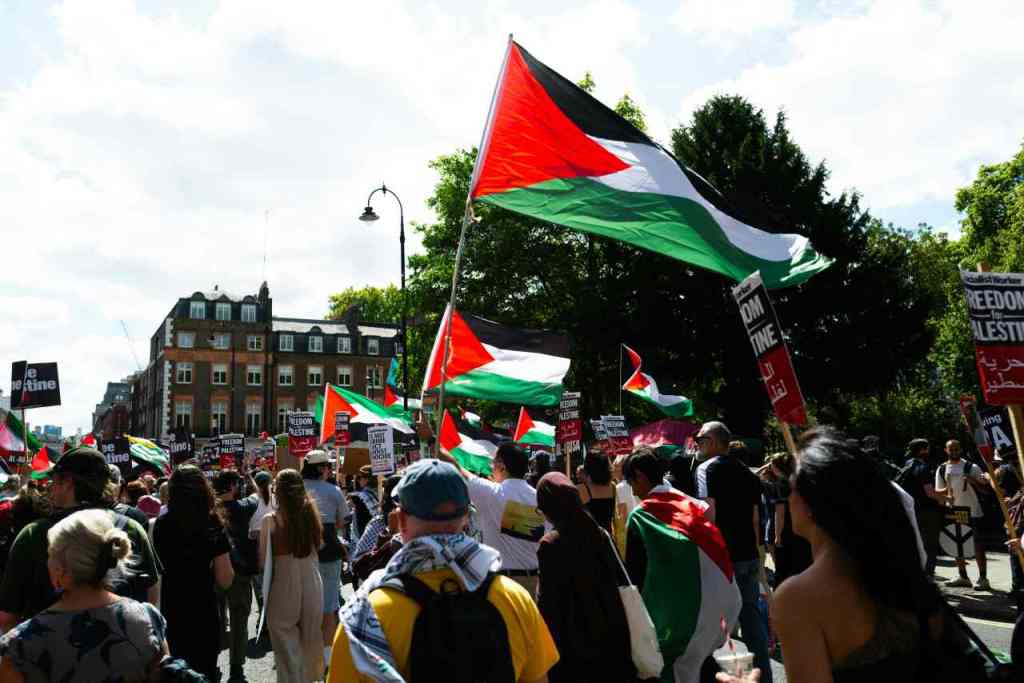
A ubiquitous and undeniably powerful symbol throughout the protests was the Palestinian flag. Held aloft by thousands, these flags served as a clear declaration of solidarity with the Palestinian people and a potent visual representation of their national aspirations and struggle for liberation. The sheer volume of flags transformed public spaces into vibrant displays of support, creating an unmistakable visual identity for the movement and its cause as it moved through the urban environment. These flags are more than just symbols; they represent a people and a cause that many feel is being overlooked.
Artistic Expressions and Memorials
Beyond flags and banners, the protests incorporated various forms of artistic and symbolic expression. Demonstrators created and displayed large art pieces, including painted portraits of journalists who had been killed during the conflict, highlighting the immense dangers faced by media professionals reporting from the region. A particularly striking and poignant element was a large cardboard replica of a press vest, a symbol that has become tragically associated with the vulnerability and targeting of journalists in conflict zones. These artistic elements added a layer of solemn remembrance, underscoring the human cost of the conflict in a deeply moving way. Such creative expressions help to humanize the statistics and bring a tangible sense of loss to public view.
Use of Symbols Associated with Resistance
The visual communication of the protests also included symbols explicitly associated with resistance. As noted in some reports, certain activist groups have utilized symbols, such as inverted red triangles, which have also been employed by armed Palestinian factions. While intended by organizers to represent defiance and solidarity, the adoption of such symbols has also drawn scrutiny and criticism, sparking debate about the broader implications and affiliations of the movement. The strategic use of symbols, whether universally recognized or more politically charged, is a key component of how protest movements communicate their identity and intent to a wider audience. Understanding these symbols can provide deeper insight into the motivations and messages of the movement.
Law Enforcement Presence and Legal Ramifications
Large-scale demonstrations invariably involve a significant interaction with law enforcement. The “Flood Manhattan for Gaza” march was no exception, with a visible NYPD presence and instances of detentions and arrests that highlighted the legal boundaries of protest in a major urban center.
NYPD Deployment and Tactics
The August 2025 demonstrations, including the significant mobilization in October, saw a substantial deployment of the New York City Police Department (NYPD) across various protest sites. Officers were strategically positioned to monitor marches, manage crowds, and respond to any escalations or attempts to breach restricted areas. The NYPD employed standard crowd control tactics, including establishing perimeters, directing pedestrian traffic, and intervening when specific actions were deemed to violate public order or safety regulations. Their presence was a constant feature of the day, reflecting the city’s protocols for managing large-scale public gatherings and ensuring the safety of both protesters and the general public. The NYPD’s approach to protest management is often scrutinized for its effectiveness and adherence to civil liberties. For more on NYPD protest protocols, one might explore resources on NYCLU (New York Civil Liberties Union).
Detentions and Arrests During the March
During the course of the “Flood Manhattan for Gaza” march, law enforcement authorities made a number of detentions and arrests. These apprehensions primarily occurred in connection with actions that violated public order, such as blocking traffic, entering restricted areas without authorization, or resisting police directives. The arrests at Grand Central Terminal, for instance, were a direct consequence of the protesters’ decision to occupy parts of the building. These legal actions underscored the boundaries within which such protests must operate according to city ordinances and law enforcement mandates. It’s a delicate balance between the right to assemble and the need to maintain public order and access to essential services.
Legal Challenges and Rights Advocacy
Following arrests, there is often a phase of legal proceedings and advocacy related to the rights of the detained individuals. Activist groups and civil liberties organizations frequently monitor these situations, providing legal support and defending the right to protest. The narrative surrounding arrests often includes discussions about the proportionality of law enforcement responses and the protection of First Amendment rights to assembly and free speech, even when faced with potential civil disobedience or the disruption of public order. Advocacy efforts aim to ensure fair treatment and to challenge any perceived overreach by authorities. Organizations like the ACLU (American Civil Liberties Union) often play a vital role in these advocacy efforts.
Broader Context of the “Global Day of Rage”
The “Flood Manhattan for Gaza” march was not an isolated incident but a significant component of a much larger, coordinated global response. It was framed within a “Global Day of Rage,” an intentional amplification of international solidarity and a collective effort to exert pressure on governments worldwide.
International Calls for Solidarity
This demonstration in New York was part of a concerted global effort. It was framed within a “Global Day of Rage,” signifying an international effort to exert pressure on governments and international bodies regarding the dire situation in Gaza. These worldwide demonstrations aimed to create a unified message from various cities and nations, emphasizing the pervasive global concern and the shared demand for an end to the conflict and the profound humanitarian suffering it caused. The interconnectedness of global movements was on full display, showing that events in one part of the world can spark widespread action elsewhere.
Coordinated Actions in Other Cities
On this designated “Global Day of Rage,” solidarity protests and demonstrations took place in numerous cities across the United States and internationally. From San Francisco to Boston, and in locations like Toronto, activists organized marches, rallies, and other forms of public action. This synchronized global activism was designed to amplify the collective impact, demonstrating that the calls for justice and peace in Gaza were not confined to one region but represented a widespread international sentiment and a coordinated demand for change. Such global coordination amplifies the message and signals a unified international concern.
Alignment with Anniversary Commemorations
Some of the “Flood New York City for Gaza” events, particularly those planned for October 2025, were deliberately scheduled to coincide with significant anniversaries. The second anniversary of the October 7, 2023, attacks in Israel, for instance, became a focal point for renewed and intensified protests. Activists often use such anniversaries not only to commemorate past events but also to reassert their demands and draw attention to the ongoing consequences of the conflict, linking historical moments to present-day calls for resolution and justice. Timing protests around significant dates can be a strategic way to maximize media attention and public engagement.
The Enduring Activism of Within Our Lifetime
Organizations like “Within Our Lifetime” (WOL) have been at the forefront of pro-Palestine advocacy, consistently demonstrating a commitment to sustained action and mobilization. Their work shapes the discourse and energizes the movement.
Organizational Philosophy and Tactics
“Within Our Lifetime” (WOL) has established itself as a persistent and influential force in pro-Palestinian advocacy within New York City and beyond. Their organizational philosophy centers on direct action, mass mobilization, and a clear, often uncompromised, stance on Palestinian liberation. WOL has consistently employed creative and impactful protest tactics, ranging from large-scale marches to targeted actions at transportation hubs and government buildings, demonstrating a commitment to sustained activism and a strategic approach to raising awareness and demanding policy changes. Their approach prioritizes visible, impactful demonstrations to pressure political decision-makers.
Leadership and Key Figures. Find out more about Gaza ceasefire demand protest message strategies.
The organization’s activities are often associated with key figures, such as Nerdeen Kiswani, a Palestinian-American activist and alumna of the City University of New York (CUNY) system, who has been a prominent leader and spokesperson for WOL. Figures like Kiswani articulate the movement’s objectives and provide a voice for its demands, often engaging with media and policy discussions. The leadership’s vision and articulation are instrumental in shaping the public perception and direction of the organization’s campaigns. Strong leadership is vital for maintaining focus and galvanizing support in any advocacy movement.
Impact on Public Discourse and Policy Debates
Through consistent and high-profile demonstrations, WOL and its allies have significantly contributed to the ongoing public discourse surrounding the Israeli-Palestinian conflict, particularly within the United States. Their actions have injected urgency into policy debates, challenged dominant narratives, and brought the humanitarian crisis in Gaza to the forefront of public consciousness. While their methods and messaging may be controversial to some, their persistent activism has undeniably amplified the voices calling for a reassessment of US foreign policy and a greater focus on Palestinian rights and self-determination. Their impact can be seen in the increased media attention and public discussion surrounding these issues. Explore more about Within Our Lifetime’s work.
The Human Cost: A Deeper Look at Gaza’s Crisis
The statistics and political dimensions of the conflict often overshadow the profound human suffering. The reality on the ground in Gaza is a testament to the devastating human cost of prolonged violence, a crisis that continues to demand global attention and action.
The Scale of Displacement and Destruction
The ongoing conflict has resulted in an unparalleled humanitarian crisis in Gaza, characterized by mass displacement and widespread destruction. Hundreds of thousands of residents have been forced to flee their homes multiple times, seeking refuge in increasingly crowded and inadequate shelters. Essential infrastructure, including residential areas, hospitals, schools, and sanitation systems, has been severely damaged or destroyed, leaving the population vulnerable and without basic services. This devastation paints a grim picture of the daily reality for Gazans, a reality that fuels the urgency of the protests. The sheer scale of destruction makes rebuilding and recovery an immense challenge.
Impact on Healthcare Infrastructure and Personnel
The healthcare system in Gaza has been systematically targeted and overwhelmed. Hospitals have operated under immense strain, facing critical shortages of medical supplies, electricity, and personnel. Many medical facilities have been damaged or rendered non-operational, significantly impairing the capacity to treat the injured and sick. Healthcare workers themselves have faced extreme danger, with many losing their lives while attempting to provide care under perilous conditions. The collapse of healthcare services exacerbates the suffering and increases the risk of disease outbreaks, creating a cycle of vulnerability. The resilience of the medical personnel in Gaza has been widely noted, even as they face insurmountable odds.
The Psychological Toll on the Population
Beyond the physical destruction and deprivation, the sustained conflict has inflicted profound psychological trauma on the population of Gaza, especially its children. Generations have grown up with the specter of violence, loss, and uncertainty. The constant threat of bombardment, displacement, and the witnessing of immense suffering contribute to widespread anxiety, depression, and post-traumatic stress disorder. The long-term mental health consequences of such prolonged exposure to trauma are a critical, though often overlooked, dimension of the humanitarian crisis. Addressing this psychological toll is as crucial as addressing physical needs.
The Role of International Law and Accountability
As conflict and alleged atrocities unfold, the frameworks of international law and the pursuit of accountability become paramount. These legal and ethical considerations form a crucial backdrop to understanding the demands for justice made by protesters and human rights advocates.. Find out more about Flood Manhattan for Gaza march overview.
Allegations of Violations and War Crimes
The actions and consequences of the conflict have drawn significant attention from international legal bodies and human rights organizations. Allegations of violations of international humanitarian law, including war crimes, have been leveled against various parties involved. These accusations typically pertain to indiscriminate attacks, targeting of civilian infrastructure, and the imposition of collective punishment. The documentation and investigation of such alleged violations are crucial for ensuring accountability and upholding international legal norms. Organizations like Human Rights Watch meticulously document these alleged violations.
Calls for Investigation and Justice
Activists and international observers have consistently called for thorough and impartial investigations into alleged atrocities and violations of international law. The demand for justice extends to holding accountable those responsible for actions that result in widespread civilian casualties and humanitarian suffering. International courts and tribunals, along with national legal mechanisms, are seen as potential avenues for addressing these concerns, though the complexities of international politics often present significant obstacles to achieving accountability. The pursuit of justice is a long and often arduous process, requiring persistent advocacy.
The Challenge of Enforcement and Sovereignty
A persistent challenge in the context of international law is the effective enforcement of rulings and judgments. The principle of state sovereignty can often complicate efforts to investigate and prosecute alleged violations, particularly when powerful nations are involved. Despite the existence of international legal frameworks, their application can be inconsistent, leading to frustration among those seeking justice and accountability for victims of conflict and human rights abuses. The struggle to enforce international law remains a critical aspect of global efforts to prevent atrocities and protect civilian populations. This tension between sovereignty and international justice is a recurring theme in global affairs.
Media Representation and Public Perception
How events are reported, interpreted, and disseminated significantly shapes public understanding and influences policy. The media landscape surrounding the conflict and protests is complex, with various platforms playing distinct roles.
Narratives in Mainstream Media Outlets
The portrayal of the conflict and related protests in mainstream media outlets often shapes public perception and influences policy debates. Different news organizations may adopt distinct narrative frameworks, emphasizing certain aspects of the conflict while downplaying others. This can lead to varied interpretations of events, including the motivations of protesters, the severity of the humanitarian crisis, and the actions of governments involved. The way events are framed can significantly impact public opinion and the political salience of the issue. It’s vital for audiences to consume news from a variety of sources to get a balanced perspective.
The Influence of Social Media and Alternative Platforms
In contrast to traditional media, social media and alternative news platforms have played a transformative role in disseminating information and shaping narratives surrounding the conflict. These platforms allow for the rapid sharing of eyewitness accounts, user-generated content, and diverse perspectives that may not receive prominence in mainstream coverage. Protests themselves often leverage these digital tools for organization, communication, and real-time dissemination of events, as indicated by the inclusion of video links from platforms like X in initial event descriptions. Social media can democratize information but also risks the rapid spread of misinformation.
Bridging Information Gaps and Countering Misinformation. Find out more about Penn Station pro-Palestine protest definition guide.
The proliferation of information, both accurate and inaccurate, on digital platforms presents a challenge in discerning objective truth. Activist groups and concerned citizens often work to counter misinformation and highlight underreported aspects of the crisis. Efforts to bridge information gaps involve sharing verified reports from international organizations, providing context for events, and amplifying voices that may be marginalized in conventional media. This ongoing effort to inform the public accurately is crucial for fostering informed debate and promoting effective advocacy. Critical media literacy is essential for navigating today’s information ecosystem.
The Future of Pro-Palestine Activism in 2025 and Beyond
The “Flood Manhattan for Gaza” march is a snapshot of a larger, ongoing movement. Understanding its future trajectory requires looking at how activism evolves, adapts, and maintains its long-term vision.
Sustaining Momentum for Advocacy
The “Flood Manhattan for Gaza” march and similar actions in 2025 reflect a sustained and evolving pro-Palestine activist movement. Organizers face the ongoing challenge of maintaining public engagement and momentum in the face of a protracted conflict and shifting geopolitical landscapes. Strategies for sustained advocacy involve a continuous cycle of awareness campaigns, public demonstrations, political lobbying, and community organizing, aiming to keep the cause at the forefront of public and policy attention. Sustained advocacy is key to achieving long-term policy changes.
Adapting Tactics and Messaging
The effectiveness of activist movements often hinges on their ability to adapt their tactics and messaging to changing circumstances and public receptiveness. As the situation in Gaza evolves and global political dynamics shift, organizations like Within Our Lifetime may refine their approaches, exploring new forms of protest, engaging different demographics, and adjusting their communication strategies. This adaptability is essential for remaining relevant and impactful in advocacy efforts. The capacity to innovate in protest methods is a hallmark of successful long-term movements.
The Long-Term Vision for Palestinian Rights
Ultimately, the driving force behind these protests is a long-term vision for the recognition of Palestinian rights, self-determination, and an end to occupation. While specific campaigns focus on immediate crises like the situation in Gaza, the underlying goals often encompass broader aspirations for a just and lasting resolution to the Israeli-Palestinian conflict. The activism seen in 2025, from the streets of New York to international forums, represents a persistent commitment to achieving these overarching objectives through continued public pressure and advocacy. The ultimate goal for many is a comprehensive and just resolution.
Conclusion: The Echoes of October 8th
The events at Penn Station on October 8, 2025, were more than just a moment of tension in New York City; they were a powerful expression of global concern, fueled by a profound humanitarian crisis. The demands for an immediate ceasefire and unhindered aid access, coupled with a sharp critique of international complicity, echoed from Manhattan’s streets to cities worldwide. The visual language of the protests—the Palestinian flags, the artistic tributes, the potent symbols—communicated a deep-seated commitment to justice and solidarity.
As we reflect on this day, it’s clear that the activism surrounding the Gaza conflict continues to evolve, leveraging new platforms and adapting strategies to maintain pressure and foster dialogue. The actions of groups like Within Our Lifetime underscore the importance of persistent advocacy in shaping public discourse and pushing for policy change.
Key Takeaways:. Find out more about NYPD barricades protest entrance insights information.
- The “Flood Manhattan for Gaza” march highlighted urgent demands for a ceasefire and humanitarian aid, driven by dire conditions in Gaza.
- Protesters voiced strong criticism of international complicity, calling for accountability from global powers.
- The confrontation at Penn Station underscored the tension between the right to protest and maintaining public order.
- Visual symbols and artistic expressions played a crucial role in conveying the movement’s message and humanizing the crisis.
- Sustained activism, adaptive tactics, and a clear long-term vision are essential for continuing the push for Palestinian rights and a just resolution.
Actionable Insights:
For those moved by the events and the ongoing crisis:
- Stay Informed: Seek out diverse and credible sources, including international organizations and reputable news outlets, to understand the complexities of the situation. Verify information, especially from social media.
- Support Humanitarian Efforts: Consider donating to or volunteering with reputable organizations providing aid and medical assistance in Gaza. Organizations like UNRWA (United Nations Relief and Works Agency for Palestine Refugees in the Near East) are critical in this regard.
- Engage in Dialogue: Participate in respectful conversations about the conflict, sharing information and perspectives that promote understanding and advocate for peace and human rights.
- Contact Representatives: Voice your concerns to elected officials. Informed constituents can influence policy decisions and diplomatic efforts.
The call for peace and justice is a continuous one. By staying engaged and informed, we can all contribute to a more informed public discourse and support efforts towards a resolution.